Florida Gulf Coast Real Estate and Community News

Nov. 26, 2024

-Timing the Market: The Myth and the Reality of Buying or Selling Real Estate on Florida’s Barrier Islands

If you’ve been keeping tabs on the real estate market, you might think there’s a perfect time to buy or sell—a magical moment when prices hit rock bottom or soar to dizzying heights. Spoiler alert: it doesn’t exist. Whether you’re buying for love or profit, trying to time the market is like trying to predict the tide with a crystal ball.

Let’s break it down:

The Two Types of Buyers

There are two kinds of property owners:

  1. The Users – People who buy a home to live in, make memories, and maybe hedge against inflation.
  2. The Speculators – Those looking to profit from the ups and downs of the market.

For users, the market only matters when you’re ready to sell or buy. You’re playing the long game, and short-term market shifts are just background noise. For speculators, every headline and trend feels like a potential jackpot—but even they can’t always hit the bullseye.

The Case of the Missed Bottom

Back in 2012, I worked with buyers convinced they could catch the bottom of the market. Three-bedroom waterfront condos were going for $300,000—bargains by any measure. But one buyer held out for perfection: a 3-bedroom, 3-bath condo with a two-car garage, a boat slip, a full water view, pet-friendly rules for two big dogs, and a prime location near the beach—all for $350,000.

Spoiler alert: perfection didn’t happen. By the time the buyer decided to jump in, those dream condos were gone. Instead, they paid $450,000 for a less ideal property. The moral? Waiting for the perfect moment often means missing out.

The Media Mirage

Here’s a funny thing about market headlines: they’re always late to the party. When the media announces that “the market is turning,” the shift has already happened. Why? Because humans need to see something to believe it. If you’re waiting for confirmation in print, you’ve probably missed your chance to act.

Why the Barrier Islands Are Different

Unlike highly leveraged urban markets, beach markets like ours are built differently. When prices soften, sellers don’t panic. They simply take their properties off the market and wait for sunnier days. This stability helps prevent the wild swings you might see elsewhere. So no, we’re not in a bubble, and we’re not poised for a crash.

What This Means for You

If you’re buying a property to enjoy life on the Barrier Islands, focus on finding a home that fits your needs, not the perfect deal. The memories you’ll make and the sunsets you’ll watch are worth more than hitting some mythical “perfect price.” If you’re investing, remember: even the pros rarely nail the market timing.

Instead of obsessing over the perfect moment, ask yourself: is this the right moment for me? Because in the end, the only market timing that matters is your own timeline.

So take a deep breath, embrace the salt air, and let’s find your slice of paradise—whether the tide is in or out.

Ready to see the hottest homes on the Barrier Islands right now? Explore our Featured Properties →


Thinking of selling? Let’s make sure your home isn’t just another listing buyers scroll past. Call/text (727) 496-6112 & I’ll show you exactly what’s working — and what’s not.

Want the numbers for your street, your building, or your HOA? I’ll pull a custom report and help you make sense of the chaos. Call/text (727) 496-6112.

Nov. 5, 2024

-What's Happening On The Barrier Islands? Your November 2024 Market Update

What’s Going On With Florida Real Estate After Hurricanes Helene and Milton?

It’s no surprise that everyone I talk to is asking about the status of Florida real estate after Hurricanes Helene and Milton swept through our area. The truth? Anyone claiming to know exactly what’s going on, what’s coming next, and what buyers and sellers should do is making promises they can’t keep. This was a black swan event—unpredictable and unprecedented.


Here’s what I can do:

Share what was trending before the hurricanes.

Explain what’s happened between September and November 2024.

Offer insights to help you navigate the uncertainty.

________________________________________

What Was Happening Before Helene?

Tight Inventory Propped Up Prices

Before September 2023, limited inventory kept prices artificially high. But things started shifting:

Contracts Dipped: Fewer homes were going under contract.

Listings Rose: The number of active listings increased significantly.

Closings Plateaued: The market hit pause.

Sellers Held Out During Fall 2023

From October 2023 to January 2024, more homes hit the market, but many sellers clung to 2021 price expectations. As a result:

Residential real estate closings fell.

Properties going under contract stayed flat.

Spring 2024: The Usual Bump (and a COVID Hangover)

Every Snowbird Season, listings spike as sellers hope to attract those buyers. In 2024, this seasonal trend was amplified by homeowners rushing to cash in on the tail end of the post-COVID mini-boom.

April 2024: Sellers Gave Up or Gave In

By April, reality set in for homes lingering on the market:

Give Up: Some owners pulled their properties off the market.

Give In: Others adjusted their prices to meet buyer expectations and secured sales.

Summer 2024: Active Listings Began to Fall

By July 2024, inventory started tightening again as appropriately priced properties sold, and those priced too high were withdrawn.

________________________________________

Post-Hurricane: September to November 2024

Surge in Properties Pulled From The Market


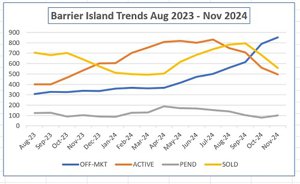
After the hurricanes, the number of off-market properties increased dramatically. On the graph (the blue line), this trend looks like a hockey stick with a sharp hook at the end—marking a significant shift in the market. 


Single-Story Homeowners in Limbo (For Now)

Many single-story homeowners are in a holding pattern, waiting for substantial damage letters. These letters determine if damage exceeds 50% of a property’s value, which impacts rebuilding decisions. Until then:

Homeowners park RVs in driveways and live on-site to protect their properties.

Some homes are re-listed at reduced prices, showcasing remediation efforts like stripped interiors and removed furniture.

________________________________________

What’s Happening Now?

Right now, uncertainty reigns for single-story sellers as they wait for clarity on government policies and insurance outcomes. Regardless of weather events or market conditions, people continue to buy and sell properties. That's why in our chart, above, the number Sold & Pending is never zero. 

What’s Next?

With the Barrier Islands' proximity to Beach and Bay, blend of small town cultures and recent media spotlight, home & condo buyers are stalking real estate portals for new listings. There will be money flowing here. Smart home sellers will get ahead of the avalanche of competition.

While it’s impossible to predict the future, here are a few possibilities:

Surge in Listings of Teardowns: Once homeowners get clarity, we may see a wave of listings as those homeowners unable or unwilling to lift or rebuild single-story homes decide to sell for the land value. 

Price Adjustments: Properties returning to the market may try to attract buyers faster with further price reductions.

Demand Shifts: Buyers may focus on buildable lots, elevated homes or newer builds with flood & hurricane-resistant features.

________________________________________

How I Can Help

If you’re unsure what to do next—whether you’re buying, selling, or just trying to protect your investment—let’s talk. I’ll help you interpret the data, understand your options, and make decisions that align with your goals.

Call or text me anytime at (727) 496-6112. Let’s navigate this uncertain market together.


Ready to see the hottest homes on the Barrier Islands right now? Explore our Featured Properties →


Thinking of selling? Let’s make sure your home isn’t just another listing buyers scroll past. Call/text (727) 496-6112 & I’ll show you exactly what’s working — and what’s not.

Want the numbers for your street, your building, or your HOA? I’ll pull a custom report and help you make sense of the chaos. Call/text (727) 496-6112.

Oct. 8, 2024

-What's Happening On The Barrier Islands? Your October 2024 Market Update

Our October 2024 Edition of the Barrier Islands Real Estate Market Report delivers a quick, clear-eyed look at market patterns. Click the link or image to see the August 2024 report.

Ready to see the hottest homes on the Barrier Islands right now? Explore our Featured Properties →


Thinking of selling? Let’s make sure your home isn’t just another listing buyers scroll past. Call/text (727) 496-6112 & I’ll show you exactly what’s working — and what’s not.

Want the numbers for your street, your building, or your HOA? I’ll pull a custom report and help you make sense of the chaos. Call/text (727) 496-6112.

Sept. 21, 2024

-What's Happening On The Barrier Islands? Your September 2024 Market Update

What’s Happening on the Barrier Islands?

Hey neighbors! If you’ve been wondering what’s happening in real estate here on the Barrier Islands, I’ve got the scoop. Whether you’re a curious homeowner keeping an eye on property values, or maybe you’ve been thinking about selling, the latest numbers are in—and they’re telling an interesting story.

What About Homes That Didn’t Sell?

Not every home is flying off the market. Starting in May 2024, the number of homeowners pulling their properties from the market has increased 87.5% compared to the same time last year. That’s a big shift!

What’s even more interesting is that 63% of the homes that went off the market in May are still off-market today. We live in a unique resort area, which means many of these properties are second homes or vacation rentals, so owners might feel like they can wait things out. Just because they haven’t sold doesn’t mean they don’t want to sell.

Could We See a Wave of New Listings Soon?

Here’s where things get interesting. There are currently 721 properties actively for sale on the Barrier Islands, but with over 1,600 homes recently pulled off the market and not re-listed, we could see a flood of listings at any moment.

I took a closer look, and 37% of the 2,563 homes taken off the market over the past few months have already come back online—usually at a reduced price. And get this: 57% of those are now either sold or under contract.

So, if you’ve been thinking about selling your beach property, this is definitely something to keep an eye on. There are still plenty of buyers out there, and with fewer homes now actively for sale, this could be the perfect time to test the waters before any market shifts.

As always, if you want to talk more about what’s happening on our beautiful Barrier Islands or you’re curious about the value of your property, feel free to reach out. We're here to help!

Aug. 27, 2024

-What's Happening on the Barrier Islands? Your August 2024 Market Update

The Barrier Islands Real Estate Market Report provides a quick, clear-eyed look at current market trends and patterns. Here’s what the latest data reveals, along with insights based on our frontline experience.

Inventory Trends: Plateauing and Thinning Supply

Starting in April 2024, the supply of properties on the Barrier Islands plateaued before beginning to thin. This shift is due to two main factors:

  • Property Sales: The number of properties sold continues to impact inventory (yellow line in the graph).
  • Off-Market Properties: Many owners are choosing to remove their homes from the market (blue line in the graph). Between August 2023 and August 2024, the number of off-market properties increased by 82.41%.

Overpricing: A Losing Strategy

Despite clear market evidence, we’re still seeing:

  • Overpriced Listings: Some new listings hit the market with unrealistic pricing.
  • Consequences: Overpriced homes often stay on the market longer and fail to attract offers.

Sellers, remember: pricing competitively while considering buyer priorities is the key to reducing days on market and securing offers.

Move-In Ready Homes Are in High Demand

Regardless of market conditions, one trend is clear:

  • Buyers in all price ranges are willing to pay for updated or semi-updated, move-in-ready homes.
  • According to Curbio, 77% of buyers say they won’t even consider homes that aren’t move-in ready.

A Word of Advice: Consult Before Making Repairs

Before starting repairs or improvements, talk to us first!

  • Why? Unplanned or unnecessary updates could cost you more and hurt rather than help at closing.
  • How We Help: We know buyer priorities and can recommend free or inexpensive ways to make your home move-in ready without overextending your budget.

We’re Here to Help

This report is designed to help you make informed decisions—whether you’re looking to buy, sell, rent, or hold. Let’s talk about how these trends affect your unique situation.

Call or text us anytime at (727) 496-6112. We’re here to guide you every step of the way.


July 11, 2024

-(Re-Post) Do Rising Mortgage Rates Lead to Falling Home Prices?

Freddie Mac: Rising Mortgage Rates DO NOT Lead to Falling Home Prices | MyKCM

I'm re-posting this blog from March, 2018. At the time, Sellers were worried about home values going down because of high interest rates -- 4.45% at the time. (Buyers would love to have those rates today.) This blog is timeless because it makes the point that it's not interest rates. It's about supply and demand. That is true whether rates are 4% or 10%.

In 2023, buyers were convinced that rising interest rates would mean a deluge of cheap properties. No matter the list price, buyers told me, "that's too high. I'm gonna wait until prices come down." Instead, prices were being squeezed up because of the low inventory and those buyers missed out on some great houses. 

------------------------------------------------------------------------------

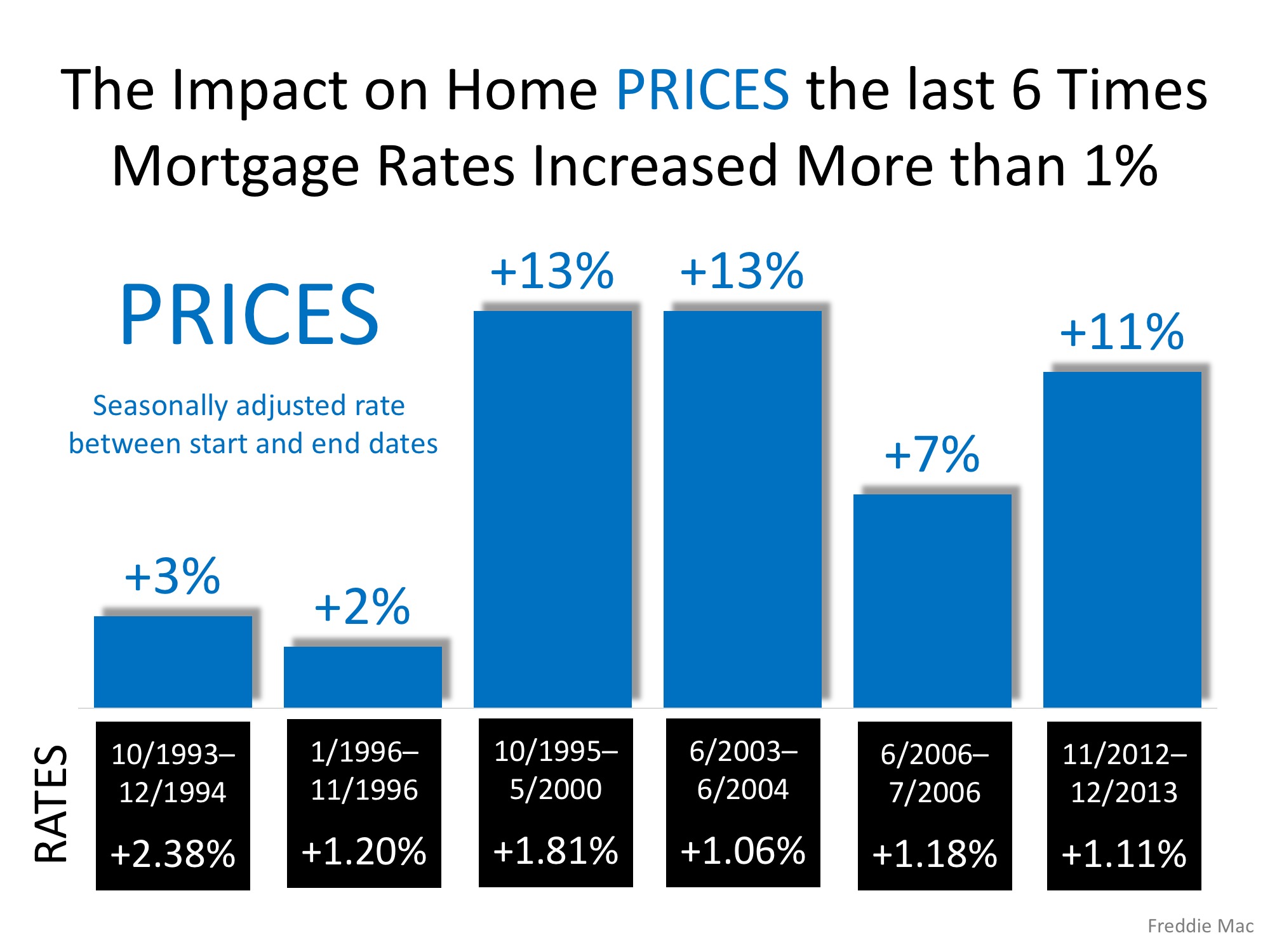
Recently, Freddie Mac published an Insight Report titled Nowhere to go but up? How increasing mortgage rates could affect housing. The report focused on the impact the projected rise in mortgage rates might have on the housing market this year.

Many believe that an increase in mortgage rates will cause a slowdown in purchases which would, in turn, lead to a fall in house values. Ultimately, however, prices are determined by supply and demand and while rising mortgage rates may slow demand, they also affect supply. From the report:

 “For current homeowners, the decision to buy a new home is typically linked to their decision to sell their current home… Because of this link, the financing costs of the existing mortgage are part of the homeowner’s decision of whether and when to move.

Once financing costs for a new mortgage rise above the rate borrowers are paying for their current mortgage, borrowers would have to give up below-market financing to sell their home.

Instead, they may choose to delay both the sale of their existing home and the purchase of a new home to maintain the advantageous financing.”

The Freddie Mac report, in acknowledging this situation, concluded that prices are not adversely impacted by higher mortgage rates. They explained:

“While there is a drop in the demand for homes, there is an associated drop in the supply of homes from the link between the selling and buying decisions. As both supply and demand move together in this way they have offsetting effects on price—lower demand decreases price and lower supply increases price.

They went on to reveal that the Freddie Mac National House Price Index is…

“…unresponsive to movements in interest rates. In the current housing market, the driving force behind the increase in prices is a low supply of both new and existing homes combined with historically low rates. As mortgage rates increase, the demand for home purchases will likely remain strong relative to the constrained supply and continue to put upward pressure on home prices.”

The following graph, based on data from the report, reveals what happened to home prices the last six times mortgage rates rose by at least 1%.

Freddie Mac: Rising Mortgage Rates DO NOT Lead to Falling Home Prices | MyKCM

Bottom Line

Whether you are a move-up buyer or first-time buyer, waiting to purchase your next home based on the belief that prices will fall because of rising mortgage rates makes no sense.

April 7, 2018

-Rugs Eat Equity

Of Rugs and Gestalt: How to Avoid Visual Black Holes When Selling Your Property

There is a maxim in the home staging world, "Clutter eats equity." Clutter makes spaces look smaller, detracts from a property's selling features, and prevents buyers from feeling "at home" in your house or condo.

Because buyers these days usually take their first "tour" of your property online, you should also pay close attention to two-dimensional visual "clutter" in listing photographs. The first target: rugs.

Yes, rugs! Those lovely floor coverings that make your house feel "homey" in person will overwhelm the same room when viewed on a computer or smartphone screen. When we're staging one of our listings before the professional photographs, rugs are the first things to go. To understand why, in this article, we take you on a brief trip through design theory and in particular the principles of gestalt. Call this the Blackburn Coastal Realty Advanced Seminar.

Gestalt Design Principles for Home Sellers

"Gestalt" is a theory of psychology that deals with how we perceive visual elements. According to design guru Steven Bradley writing in the web design bible Smashing Magazine, gestalt "lies at the heart of nearly everything" designers do. The theory's essential observation is that the eye perceives a group of objects as a unified whole before it sees them as individual objects. Check out the link for some intriguing demonstrations of gestalt design principles in your own perception of images.

One of the essential principles of gestalt is the concept of "visual weight." Just as physical weight is a measure of the force gravity asserts on an object in three-dimensional space, visual weight measures the ability of an image to draw the eye's attention in two-dimensions. In a photograph, the element with the most visual weight is the one that attracts your eye first and holds it the most. 

The Unbearable Visual Heaviness of Being an Area Rug


Just look at the difference!

With the concept of visual weight in mind, consider the area rug. Lowly in stature but often quite expensive, an area rug does tremendous decorative work in three-dimensions. Not only is it an expression of the home owner's (hopefully good) taste, it helps define areas and directs the flow of movement through a room. It also protects and preserves hardwood floors, often a prime property asset. 

But in two dimensions, that gorgeous Persian rug becomes a visual black hole. No amount of creative lens work, lighting, or digital retouching can distract from its insistent visual pull. Forget the floors underneath, or the sensational water view, or the gleaming granite countertops. Gestalt design principles dictate, and our years of experience have borne out, that the first visual element a potential buyer sees in that photograph is a rug that detracts from everything else about the property. That rug weighs down the room, sucking up all the square footage and eating up your equity.

Rugs Eat (Measurable) Equity


It couldn't be more clear - rugs eat equity!

You can actually measure how much equity rugs will eat. In real numbers, a twenty square foot rug in a market where homes sell for $200 per square foot risks leaving $4,000 of your equity on the...er...floor. A corollary to the maxim that clutter eats equity is that flat surfaces - floors, countertops, mantlepieces - sell. Cover them up in your online listing when home staging and, in effect, you risk losing their value in the buyer's offering price.


Don't Get Walked on By The Home Market! Contact Blackburn Coastal Realty Now!

At Blackburn Coastal Realty, we use psychology-driven design and marketing insights to maximize the selling value of your home. To learn more about how we use gestalt design principles in our home staging to get the most profitable effect in two and three dimensions, contact us today.


Positive comments are welcome below (especially from relatives who do not owe me money) and will be posted on our website. Negative comments will be posted on my dartboard office wall.

March 28, 2018

-Tips For Sellers in a Seller's Market

(Put Buyer's Minds at Ease and More Cash in Your Pockets)

Photo Credit: Michael Tunnell

Emotions Run High in a Seller's Market

Here in the Gulf Beaches area of Tampa Bay, it's a Seller's market. Inventory is tight, and buyers learn quickly they need to jump on new listings and make lightning-fast offers. That should make it easy for sellers to get top dollar for any property. In a market like this, it would be unusual for a sales contract to unravel over some minor hiccup like a home inspection or appraisal, right?  

nervous-buyer-real-estate-agentWrong. In our experience, this actually increases the chances of a sale falling through over a trivial issue. Why? Because the speed at which buyers have to move in this market gives them no time to grow an emotional bond with your property. Instead, the stress of acting quickly makes buyers feel cornered, defensive...even skittish. They overreact to perceived imperfections. "I'm uncomfortable moving so fast with so much money at risk," their thinking goes, "so this place had better be perfect." When your property turns out to have even the smallest, most fixable flaws, or the appraisal comes in just a little below their offer, buyers in this Seller's Market are more prone to head for the exits or demand a price adjustment!
A broken deal can hurt your property's selling price because it increases the "Days on Market" ("DOM") metric. The longer your home is on the market, the higher that number is and the more likely buyers are to assume something is wrong with it. The result: your list price drops or, worse, you can't sell at an acceptable price at all!

Achieve Top Dollar With a Nervous Buyer's Mindest

So, what do you do? Well, you could just sit back and hope the market cools off, but that wouldn't make sense. This is the time for you to maximize your selling price -- you just have to know how. You could obsess about finding any flaw in your property that might scare buyers. Yes, it's good to evaluate your property with a critical eye, but overdoing it could mean wasting money on improvements that don't bring a higher price.

Instead, try to empathize with the stressed-out buyer's mindset and ask yourself, "How can I help buyers develop a strong emotional bond with my property in the short time available to fall in love with it?" Here are two strategies we have found can make a difference:

  • Effective Staging:

    One critical mistake sellers make in this market is assuming they don't need to pay attention to aesthetics at all - since it will fly off the shelf no matter how it looks. Sellers also tend to over-value their own decorative taste and figure that if they love how their property looks, buyers will too. Your interior decorating was a personal choice you made for yourself, not for others. Decorating is not staging. We encourage you to step away from your own taste and let us help you stage your property so that the buyer's first impression is that they have walked into their own home, not someone else's.  

  • Smart Listing and Showing:

    How a property is listed and marketed conveys important information to a buyer. Research suggests that the timing of when your home appears on the market, the number of photographs in the listing, precision with which it is priced, and even the number of people at an open house can affect buyer behavior, tapping into their desire for certainty and security in a turbulent buying process. We encourage our clients to consider these insights, and we show them how the smallest adjustment in presentation, or how showings are scheduled can help buyers feel safer making an offer.

Accept the facts: hiccups in the inspection and appraisal process happen, and they are mostly out of your control. After you've done what you can on that front, focusing your energies on creating the right environment for your potential buyers in a Seller's Market can go a long way to ensure that the offer you accept will be the price you achieve at the closing table.

Make the Most Money For Your Home With Blackburn Coastal Realty! 

To learn more about how to take advantage of this Seller's Market, Contact Blackburn Coastal Realty today for a confidential consultation. Our marketing plan guarantees maximum exposure through pricing, staging, agent accessibility, and visibility, both online and offline. Our goal is the successful sale of your Gulf Beaches of Tampa Bay home, and at Blackburn Coastal Realty, we don't just achieve that goal - we go above and beyond it.

Positive comments are welcome below (especially from relatives who do not owe me money) and will be posted on our website. Negative comments will be posted on my dartboard office wall.

March 26, 2018

-Should I Renovate Before I Sell?

Is a Major Home Renovation Worth It in the Long Run?

Is a Major Home Renovation Worth It in the Long Run? | MyKCM

Last week, we shared 7 Factors To Consider When Choosing A Home To Retire In.” For some homeowners, these seven factors can be taken into account with a home renovation, but is it worth it to remodel or change floor plans?

Let’s look at this example.

Let’s say you have a 4-bedroom colonial style home in a great school district. The neighborhood is amazing, and you are very comfortable there, but your kids are all grown up and the original benefits of the home no longer apply.

You’ve always wanted a huge master suite and are considering merging 3 of the smaller bedrooms on the second floor to achieve this dream.

In the short term, you are over the moon excited about your newly renovated oasis.

In the long term, when you go to sell your home down the road, you’ve now taken a 4-bedroom home in a great school district and turned it into a 2-bedroom home. Your pool of potential buyers has shrunk significantly and so has the value of your home (unless you are able to find someone who has the exact needs you have today!).

Why not consider listing your 4-bedroom home now and moving into a gorgeous 2-bedroom with a master suite? Your house can become a home for the next family looking for that perfect neighborhood with a great school district to raise their kids in!

You may even be able to achieve your dream in the same area you love, without having to give up your favorite restaurants and grocery stores.

Bottom Line

If you are debating a major renovation that would change the layout of your home, before you pick up that sledgehammer, let’s get together and discuss the available listings in our area that might meet your needs today!

March 25, 2018

-Do Rising Mortgage Rates Lead to Falling Home Prices?

Freddie Mac: Rising Mortgage Rates DO NOT Lead to Falling Home Prices | MyKCM

Recently, Freddie Mac published an Insight Report titled Nowhere to go but up? How increasing mortgage rates could affect housing. The report focused on the impact the projected rise in mortgage rates might have on the housing market this year.

Many believe that an increase in mortgage rates will cause a slowdown in purchases which would, in turn, lead to a fall in house values. Ultimately, however, prices are determined by supply and demand and while rising mortgage rates may slow demand, they also affect supply. From the report:

 “For current homeowners, the decision to buy a new home is typically linked to their decision to sell their current home… Because of this link, the financing costs of the existing mortgage are part of the homeowner’s decision of whether and when to move.

Once financing costs for a new mortgage rise above the rate borrowers are paying for their current mortgage, borrowers would have to give up below-market financing to sell their home.

Instead, they may choose to delay both the sale of their existing home and the purchase of a new home to maintain the advantageous financing.”

The Freddie Mac report, in acknowledging this situation, concluded that prices are not adversely impacted by higher mortgage rates. They explained:

“While there is a drop in the demand for homes, there is an associated drop in the supply of homes from the link between the selling and buying decisions. As both supply and demand move together in this way they have offsetting effects on price—lower demand decreases price and lower supply increases price.

They went on to reveal that the Freddie Mac National House Price Index is…

“…unresponsive to movements in interest rates. In the current housing market, the driving force behind the increase in prices is a low supply of both new and existing homes combined with historically low rates. As mortgage rates increase, the demand for home purchases will likely remain strong relative to the constrained supply and continue to put upward pressure on home prices.”

The following graph, based on data from the report, reveals what happened to home prices the last six times mortgage rates rose by at least 1%.

Freddie Mac: Rising Mortgage Rates DO NOT Lead to Falling Home Prices | MyKCM

Bottom Line

Whether you are a move-up buyer or first-time buyer, waiting to purchase your next home based on the belief that prices will fall because of rising mortgage rates makes no sense.